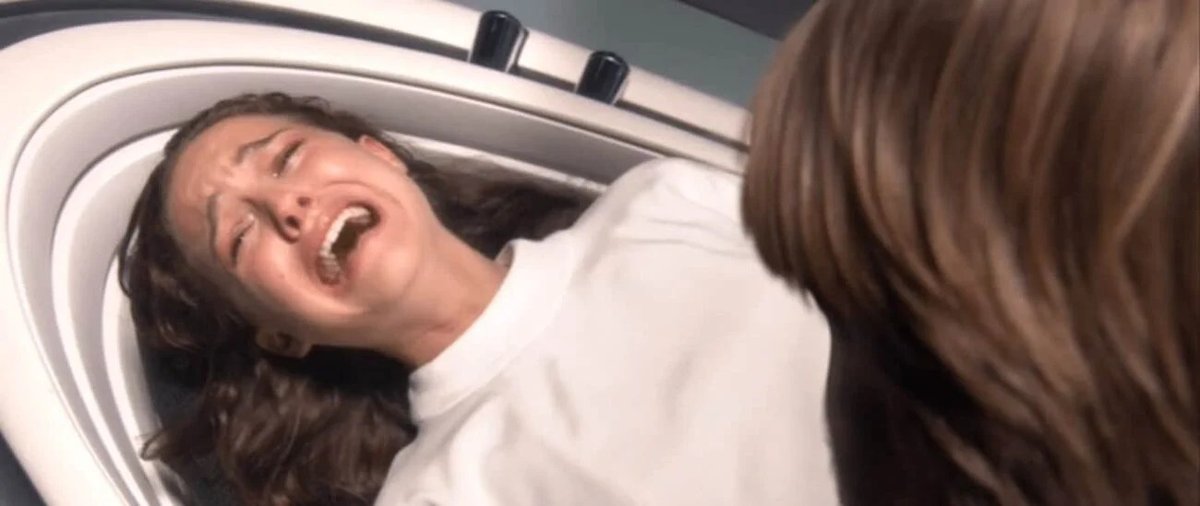
The demise of Padmé Amidala remains one of Star Wars' most enduring, and perhaps most frustrating, narrative ambiguities. For decades, fans have grappled with the on-screen explanation of Padmé's official cause of death, delivered by a medical droid on Polis Massa: she simply "lost the will to live." This diagnosis, however, has always felt incomplete, even incredulous, especially given the fierce, resilient character we knew. Was it truly a broken heart that claimed her, or was there something darker, more complex, at play in the final moments of the woman who birthed Luke and Leia?
This article dives deep into the context, controversies, and compelling alternative theories surrounding Padmé’s death, moving beyond the simplistic explanation to explore the multifaceted tragedy that shaped the fate of the galaxy.
At a Glance: Unpacking Padmé's Demise
- The Official Stance: A medical droid attributed Padmé's death to "losing the will to live," despite her good physical health.
- Key Contradictions: This explanation clashes with Padmé's strong character, her desire to fight the Empire, and her two newborn children.
- Underlying Issues: "Losing the will to live" lacks a clear medical basis and was met with skepticism by Obi-Wan Kenobi.
- Alternative Theories:
- Traumatic Assault: Anakin's Force choke on Mustafar may have caused unseen internal damage.
- Pregnancy Complications: Anakin's earlier premonitions hinted at childbirth dangers.
- The Force's Intervention: A fan theory suggests the Force itself played a role in her passing to advance Anakin's destiny.
- Narrative Impact: Her death is widely considered a disappointment, undermining her character and adding to the tragedy of Anakin's fall.
The Enigma of "Lost Will": A Diagnosis Without Metrics
Let's start with the provided "official" explanation. Following a harrowing confrontation on Mustafar and the birth of her twins, Luke and Leia, Padmé is rushed to a medical facility on Polis Massa. The highly advanced medical droid, after extensive scans, declares her physically healthy, yet states, "Medically, she is completely healthy. For reasons we can't explain, we are losing her... She has lost the will to live."
Obi-Wan Kenobi, who had just witnessed the full horror of Anakin's fall, is visibly incredulous. "What are you talking about? She's young. She's in perfect health." His reaction mirrors the confusion many viewers felt. How could such a definitive pronouncement be made, particularly by a machine designed for objective diagnostics?
A Diagnosis Without Metrics
The fundamental issue here is one of quantifiable data. A medical droid, no matter how advanced, operates on algorithms and detectable vital signs. There is no known biological metric for "the will to live." It's an abstract, philosophical concept, not a physiological one that can be measured by a scan. This makes the droid's statement seem less like a medical diagnosis and more like a pronouncement of surrender, which, for Padmé, feels profoundly out of character.
Imagine a hospital today: a doctor can explain heart failure, organ damage, or infection. But to say a patient died because they "lost the will to live," without any underlying physical cause, defies conventional medical understanding. While emotional trauma can certainly impact physical health, it rarely results in instantaneous death in an otherwise robust individual, especially post-childbirth.
The Problem with "Broken Heart Syndrome" in Healthy Individuals
Some might draw parallels to real-world phenomena like Takotsubo cardiomyopathy, often called "broken heart syndrome." This condition, triggered by extreme emotional stress, can indeed cause temporary heart muscle weakening. However, it's typically a reversible condition and rarely fatal, especially in healthy, young individuals without pre-existing cardiac issues. Moreover, it is a detectable physical ailment.
Padmé, described as "completely healthy" by the droid, showed no such physical symptoms. To attribute her death solely to a lack of emotional fortitude feels medically flimsy and dramatically unsatisfying, especially for a character renowned for her resilience and unwavering spirit. This leads us to question not just the diagnosis, but the circumstances that might have led to it.
Padmé's Character: Why "Lost Will" Rings Hollow
To truly appreciate the incongruity of the "lost will" explanation, we must first recall who Padmé Amidala was. Leia Organa, years later, remembered her mother as "beautiful, but sad." Yet, the Padmé we knew in the prequels was so much more. She was a beacon of strength, a force of nature who consistently fought for what was right.
She was:
- A Devoted Queen and Brave Politician: From her earliest days as the elected monarch of Naboo, Padmé demonstrated extraordinary courage, leadership, and a willingness to put herself in harm's way for her people. Her actions directly led to the liberation of Naboo from the Trade Federation.
- Wise and Discerning: She saw through political manipulations, including Palpatine's rise, and consistently challenged the status quo in the Galactic Senate, advocating for diplomacy over war.
- Kind-hearted and Selfless: Her compassion extended to all, even those who might be considered adversaries. She genuinely believed in the democratic process and the power of peace.
- A Fighter for Justice: Even after stepping down as queen, she remained a passionate senator, openly challenging the erosion of democracy and the Republic's slide into authoritarianism. Her final act of defiance was attempting to reason with Anakin, begging him to return from the dark side.
This is not the profile of someone who would simply "give up." Padmé faced insurmountable odds her entire life. She stared down blaster fire, political assassinations, and the crushing weight of galactic conflict. Even in the dire moments of Revenge of the Sith, she was pregnant, working tirelessly to form the foundations of what would become the Rebel Alliance.
Furthermore, she had two brand-new reasons to live: Luke and Leia. Her final words were, "There's still good in him... I know there is... still..." This isn't a woman who has given up; this is a woman clinging to hope, even in the face of despair. To suggest she simply chose to die, leaving her children motherless and the galaxy to tyranny, feels like a betrayal of her entire character arc. It's a major reason why her official cause of death is considered a significant disappointment by many fans.
Beyond the Medical Droid: Alternative Theories & Contributing Factors
Given the inconsistencies with Padmé's character and the medical implausibility, many theories have emerged to explain her death. These alternatives offer more satisfying, albeit tragic, explanations that resonate more deeply with the narrative and her persona.
The Unseen Trauma: Anakin's Force Choke
One of the most compelling alternative explanations centers on the traumatic assault Padmé endured at Anakin's hands on Mustafar. In a fit of rage and paranoia, believing her to have brought Obi-Wan to kill him, Anakin uses the Force to choke Padmé into unconsciousness. She collapses, clearly in distress, before Obi-Wan engages Anakin in their epic duel.
While she regains consciousness briefly later, the effects of a Force choke are largely unknown. We've seen it used to incapacitate, torture, and even kill (as with Admiral Motti in A New Hope).
Consider these possibilities:
- Internal Injuries: A Force choke is not a gentle act. It's a focused application of immense power designed to constrict vital organs or pathways. While the external bruising might be minimal or unmentioned, it's entirely plausible that the attack caused internal trauma—ruptured blood vessels, soft tissue damage, or even a cerebral hemorrhage—that might not be immediately detectable by a standard medical scan, or at least not fully understood by a droid programmed for typical physical ailments. The Force, after all, operates on a level beyond conventional science.
- Pregnancy Vulnerability: Padmé was heavily pregnant. The physical stress of the choke, combined with the strain of childbirth immediately afterward, could have exacerbated any underlying issues or directly led to complications undetectable by the droid. The sheer shock to her system, both physical and emotional, would have been immense.
- Delayed Effects: Some injuries, particularly internal ones, can manifest with delayed symptoms. The rapid sequence of events—choke, space travel, childbirth—might have masked the initial signs, with her body simply giving out under the combined strain.
This theory provides a tangible, physical cause directly linked to Anakin's actions, making Palpatine's later assertion that "In your anger, you killed her" far more literal and chilling.
Echoes of Premonition: Pregnancy Complications
From the very beginning of Revenge of the Sith, Anakin is haunted by premonitions of Padmé dying in childbirth. These visions are a driving force behind his desperation and his eventual fall to the dark side, as he seeks to gain the power to save her.
While the visions themselves are a significant plot device, they also raise a critical question: were they simply a catalyst for Anakin's fear, or did they hint at a genuine, pre-existing medical risk?
- Undetected Complications: It's plausible that Padmé had underlying childbirth complications that were either too subtle to be detected by Republic-era medical technology, or that manifested acutely during the stress of her ordeal. Perhaps her heart was weakened by a congenital condition, or her body simply wasn't capable of withstanding the immense strain of a twin birth alongside extreme emotional and physical trauma.
- Palpatine's Manipulation: Palpatine explicitly tells Anakin, "To cheat death is a power only one has achieved. But if we work together, I know we can discover the secret." This suggests that even if there were complications, Palpatine might have been aware of them and used them to push Anakin further into his grasp, offering a false promise of salvation. His later gloating to Darth Vader, "It seems in your anger, you killed her," reinforces the idea that he knew exactly how to twist the knife. He might have even interfered with the medical aid available to Padmé, subtly ensuring her death as a final emotional blow to Anakin.
This theory aligns with Anakin's initial fears and gives a more concrete, albeit still tragic, physical reason for her death beyond a simple "lost will." It transforms his premonitions from a mere psychological trigger into a stark, prophetic reality.
The Will of the Force: A Destined Demise
A more esoteric, yet thought-provoking, fan theory posits that Padmé and Anakin were intrinsically linked by the Force, and the Force itself intervened to end Padmé's life. This theory suggests that her death wasn't merely a physical or emotional failing, but a necessary sacrifice orchestrated by the cosmic balance to advance Anakin's destiny as Darth Vader and, ultimately, to bring about the rise of Luke and Leia.
Consider these points:
- The Chosen One's Destiny: Anakin was the Chosen One, destined to bring balance to the Force. His fall to the dark side was a pivotal event in galactic history. Perhaps Padmé's presence, her enduring goodness and connection to him, hindered his full immersion into the darkness. Her death, while devastating, severed that final tether, allowing Darth Vader to fully emerge.
- The Birth of Hope: Simultaneously, her death facilitates the immediate separation and protection of Luke and Leia, who would later become instrumental in Vader's redemption and the Empire's downfall. In this interpretation, her passing is less a personal tragedy and more a cosmic necessity, a Force-guided event to set the stage for future events.
- Transfer of Life Force: Some theories even suggest that Anakin, in his dying moments on Mustafar, unconsciously drew upon Padmé's life force through their Force bond to sustain himself after being horribly burned by Obi-Wan. Palpatine, a master of dark side energy, might have even facilitated this transfer, intentionally or unintentionally draining Padmé to keep his new apprentice alive. This would be a dark parallel to the Sith's ability to preserve life through the Force, albeit in a twisted, parasitic way.
While difficult to prove definitively within the films, this theory adds a layer of mystical depth to her death, framing it as a sacrifice on a galactic scale, rather than a mere emotional breakdown.
Why It Matters: The Narrative Impact of an Unclear Death
The precise cause of Padmé's death, or rather the lack of a clear and satisfying explanation, has significant narrative implications for Star Wars.
- Undermining a Strong Female Character: For many, the "lost the will to live" explanation diminishes Padmé's strength and agency. It reduces a powerful political leader and loving mother to someone who simply gives up, which feels inconsistent with everything we knew about her. It creates a disconnect that leaves audiences feeling unfulfilled by her tragic end.
- The Weight of Anakin's Actions: If her death was due to the Force choke or his turn to the dark side causing her to lose vital energy, it places an even heavier burden of guilt on Anakin/Vader. It makes Palpatine's words, "You killed her," a literal truth, not just a psychological manipulation. This adds a profound layer to Vader's torment and internal conflict.
- Leia's Recollection: Leia's memory of her mother, describing her as "beautiful, but sad," and her vague recollections of her from a young age (as recounted in Return of the Jedi) become harder to reconcile with her instant death post-birth. While it's largely an original trilogy retcon issue, a more robust explanation for Padmé's end might have provided creative avenues to bridge this gap.
- A Missed Opportunity for Depth: A clear, physically plausible, and character-consistent cause of death could have added even more tragedy and depth to the narrative. Instead, it leaves a lingering question mark, making Padmé's final moments feel less like a pivotal turning point and more like a convenient plot device to separate Luke and Leia.
Addressing Common Questions About Padmé's Demise
The ambiguity around Padmé's death naturally sparks a host of questions. Let's tackle some of the most common ones.
Could the medical droid be lying or mistaken?
It's highly unlikely the medical droid was lying intentionally. Droids are typically programmed for objective analysis. However, it's entirely plausible that the droid was mistaken or simply lacked the programming and understanding to comprehend the full scope of Padmé's condition.
The droid’s statement that Padmé was "medically... completely healthy" yet "losing her" suggests a diagnostic paradox it couldn't resolve. Its conclusion of "losing the will to live" might have been the closest interpretation it could make of a situation where all physical vital signs were normal, yet life was ebbing away. This inability to diagnose something beyond its programming (like Force-related trauma or subtle internal damage from a Force choke) makes the droid's assessment a flawed "official" record.
Did Palpatine play a direct role in her death?
While Palpatine didn't physically kill Padmé, his role in her death is undeniably central and direct through manipulation.
- Orchestrating Anakin's Fall: Palpatine systematically manipulated Anakin's fears, especially his fear of losing Padmé, driving him to the dark side and to commit the atrocities on Mustafar. Without Palpatine, Anakin would not have Force-choked Padmé.
- Using Her Death as Leverage: Palpatine explicitly tells Vader, "It seems in your anger, you killed her." This is a masterstroke of psychological manipulation, using Vader's grief and guilt to further bind him to the dark side. Even if Vader didn't directly kill her in the conventional sense, Palpatine framed it as such, making him bear the full responsibility.
- Potential Force Interference: The theory that Palpatine, a master of dark side powers, could have subtly siphoned life force from Padmé to save Anakin (or simply to ensure she died, eliminating a potential distraction for his apprentice) remains a dark, unproven possibility. Given his ability to "influence the midi-chlorians to create life," the reverse—influencing them to take life—is not far-fetched.
So, while he didn't pull a trigger or wield a lightsaber against her, Palpatine’s influence was the primary catalyst for the events leading to her demise.
Why didn't the Force-sensitive twins feel her distress?
Luke and Leia were newborn infants. While they were innately Force-sensitive, their abilities would have been completely undeveloped. At that age, their connection to the Force would be instinctual, not conscious or controlled. They wouldn't have the capacity to sense or interpret complex emotions or physical distress in their mother, especially as her life slipped away.
Think of it like a nascent instrument: the potential is there, but it hasn't been tuned or taught to play a melody. Their Force sensitivity would manifest much later in life, after significant training or under extreme circumstances.
The Enduring Legacy of Padmé Amidala's Final Moments
Padmé Amidala's death is more than just a plot point; it's a pivotal moment that cemented Anakin Skywalker's transformation into Darth Vader and set the stage for the galaxy's darkest era. The lack of a clear, satisfying explanation for Padmé's passing has kept the conversation alive for decades, prompting fans to speculate, analyze, and ultimately, find their own interpretations of this profound tragedy.
While the medical droid's diagnosis of "losing the will to live" stands as the official record, it's clear that the truth is far more complex and multifaceted. Whether it was the traumatic assault by Anakin, hidden pregnancy complications, the subtle machinations of the Force itself, or a combination of these factors, Padmé's end was a culmination of the despair, betrayal, and violence that consumed the galaxy.
Her final breaths, spent holding onto the belief in "good" within Anakin, underscore her enduring hope and selfless nature, making her death all the more poignant. Ultimately, Padmé Amidala died a victim of the war she fought so hard to prevent, and the love she tried desperately to save. Her sacrifice, regardless of its precise medical cause, birthed the hope that would one day challenge the Empire, ensuring her legacy, though tragic, would echo through the stars for generations to come.