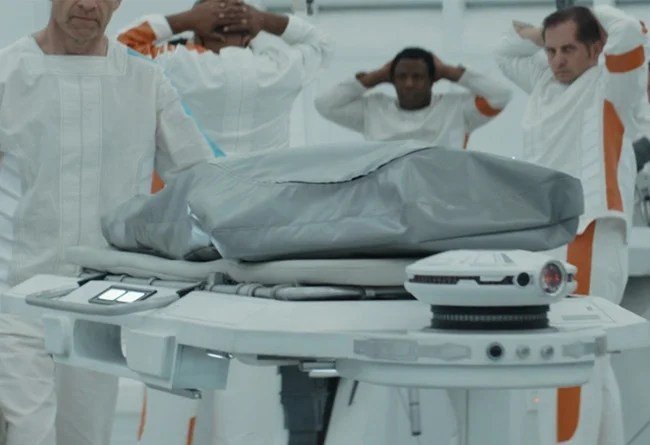
Step onto almost any medical facility in the galaxy, from the gleaming halls of a Coruscant hospital to a makeshift field tent on a frontier world, and you’re likely to encounter a medical droid. These sophisticated machines, ranging from the ubiquitous 2-1B surgical units to specialized GH-7 analysis units, have revolutionized healthcare across countless species. Their ability to deliver precise, consistent care and diagnostics has made them indispensable. Yet, for all their processing power and vast databanks, the true art of clinical decision-making, particularly in complex or nuanced situations, reveals significant Medical Droid Diagnosis and Limitations. Understanding these boundaries is critical, not just for the denizens of a galaxy far, far away, but also for us, as our own medical technologies increasingly mirror the capabilities – and challenges – of these advanced automatons.
At a Glance: What You'll Learn About Medical Droid Diagnosis
- Ubiquitous & Versatile: Medical droids (like 2-1B, FX-series, GH-7) treat a vast array of species, from routine check-ups to complex surgeries.
- Diagnostic Prowess: Equipped with advanced sensors, data banks, and analytical tools, droids can rapidly assess vital signs, analyze symptoms, and suggest treatments.
- Precision & Speed: They offer consistent, tireless care, excelling in repetitive tasks and high-precision procedures where organic limitations might interfere.
- Key Limitations: Droids lack intuition, empathy, and the ability to interpret non-quantifiable human factors. They are only as good as their programming and data.
- Human-in-the-Loop: For optimal outcomes, especially in complex or ethically charged cases, human oversight remains critical. Droids augment, they don't replace.
- Real-World Parallels: The challenges faced with medical droids mirror those in our world with AI, smart medical devices, and the need for rigorous validation.
The Synthetic Healers: A Galaxy-Spanning Legacy
Medical droids, also known by various monikers like medi-droids or surgeon droids, are cornerstones of galactic healthcare. Classified as class one droids within the larger biological science droid family, they trace their origins back to the Old Republic, establishing a legacy of advanced medical intervention. Unlike their organic counterparts, droids possess an unparalleled advantage: they can effectively treat the bewildering diversity of sentient species found across the cosmos. No need to specialize in Wookiee anatomy versus Twi'lek physiology; a well-programmed droid carries the medical lore of almost the entire galaxy in its databanks.
Think of the iconic 2-1B surgical droid, a common sight in rebel medical bays and even sophisticated private clinics. Or the FX-series medics, whose multi-limbed forms allowed for intricate maneuvers during surgery. These weren't mere robots handing tools; they were diagnosticians, surgeons, and critical care providers, often making life-or-death decisions with cold, hard logic. The GH-7 medical analysis unit, for instance, was standard issue in the Galactic Republic. These units came pre-loaded with comprehensive data on "nearly all medical problems, physical or mental," making them walking (or rolling) encyclopedias of disease and treatment. It's this fusion of vast knowledge and precise action that initially makes medical droids seem like the perfect solution to every health crisis.
Beyond the Scanner: How Medical Droids Uncover Ailments
How exactly do these metallic doctors "diagnose"? It’s a sophisticated process that blends sensor data with immense computational power, much like an organic physician uses their senses and medical knowledge.
A medical droid's diagnostic toolkit often includes:
- Multi-Spectrum Scanners: Capable of analyzing everything from internal organ function to cellular anomalies, detecting injuries, infections, and disease markers with incredible accuracy.
- Physiological Signal Monitoring: Sensors can track heart rate, respiration, blood oxygen saturation, brain activity, and countless other vital signs across different species. This is often done non-invasively, providing real-time data crucial for critical care.
- Extensive Medical Databases: Far beyond what any organic mind could contain, these databanks hold information on symptoms, diseases, genetic predispositions, treatments, and pharmacological responses for virtually every known sentient species.
- AI-Driven Analysis: Sophisticated algorithms compare observed data against known patterns, cross-reference symptoms, and identify potential diagnoses, often prioritizing the most probable conditions.
Consider how a GH-7 medical analysis unit, assisted by a midwife droid, flawlessly managed Padmé Amidala's difficult delivery and the birth of Luke and Leia at the Polis Massa Research Base. The droids would have monitored her complex physiology, analyzed fetal vital signs, and orchestrated the birthing process, drawing upon their vast knowledge base. This scene underscores their capability for critical, real-time medical management. However, even in this poignant moment, the limitations of droid diagnosis would become starkly clear, particularly in understanding Padmé's profound emotional state, as we'll explore further when discussing Understanding Padme's death.
Echoes in Our World: The Smart Device Doctor
The diagnostic prowess of medical droids isn't just sci-fi fantasy; it mirrors the rapid advancements we’re seeing in our own medical technology, particularly with everyday devices like smartphones and smartwatches. Our own "medi-droids" are evolving, leveraging high-resolution sensors, connectivity, and AI to transform from communication tools into potential diagnostic instruments.
- Heart Rate Monitoring (PPG): Just as a droid might scan Luke Skywalker’s pulse, our smartwatches use photoplethysmography (PPG) to measure heart rate, often accurately when validated against medical-grade ECGs in controlled conditions.
- Blood Oxygen Saturation (SpO₂): Infrared sensors in smartwatches can measure blood oxygen levels, often within 2 to 3 percent of professional oximeters. While useful for general wellness, just like a droid's environmental sensor might struggle in a chaotic battle, our devices can be less dependable in low-oxygen or high-risk clinical scenarios.
- ECG Functionality: Select consumer devices have even gained FDA clearance for atrial fibrillation screening, demonstrating a clear path for consumer tech to enter regulated medical territory, akin to a droid model receiving official certification from the Galactic Medical Authority.
- Respiratory & Sleep Tracking: Modern wearables are improving in accuracy for respiratory monitoring and provide useful general patterns for sleep, although they can't yet fully replace specialized polysomnography, much like a general-purpose medical droid might refer a complex neurological sleep disorder to a specialized organic sleep doctor.
These devices, whether in our pockets or on our wrists, offer mobile triage, symptom checkers, and platforms for remote monitoring of chronic conditions, much like a compact FX-series medical droid could provide initial assessment and care on a remote outpost. The promise is immense, particularly in underserved areas, echoing the accessibility that droids brought to a sprawling galaxy.
The Unseen Circuits: The Power and Precision of Droid Care
The benefits of medical droids extend far beyond mere diagnosis. They provide critical care with unwavering consistency and precision.
When Luke Skywalker sustained serious injuries after the Wampa attack on Hoth, he was placed in a Bacta tank and treated by a 2-1B and an FX-7. These droids diligently monitored his recovery, adjusting treatments, and managing the complex Bacta therapy. Later, after losing his hand on Bespin, it was these same droids at Echo Base that performed the intricate surgery to replace it with a cybernetic prosthetic, a testament to their surgical dexterity and ability to handle complex biotechnological integration. Another medical droid efficiently removed shrapnel from Luke following an escape from the Cavrilhu Pirate Base, illustrating their utility in emergency trauma care.
The Droid Advantage:
- Multispecies Expertise: The ability to treat beings from across the galaxy without needing to learn disparate biologies makes them invaluable.
- Unwavering Focus: Droids don't tire, get emotional, or make errors due to fatigue, crucial during long surgeries or monitoring shifts.
- Data-Driven Decisions: Every action is based on objective data and programmed protocols, theoretically minimizing human bias or emotional interference.
- Precision & Consistency: Robotic arms and intricate tools allow for maneuvers that human hands cannot replicate, leading to incredibly precise surgical outcomes, such as the dark reconstruction surgery performed by DD-13 cybernetic surgical droids on Darth Vader after his duel with Obi-Wan Kenobi.
Where the Circuits Falter: Inherent Limitations of Droid Diagnosis
Despite their remarkable capabilities, medical droids are not infallible. Their limitations become especially apparent in clinical decision-making, where nuance, ethics, and the messy reality of organic life often diverge from programmed logic.
1. The Chasm of Intuition and Empathy
Perhaps the most profound limitation of medical droids is their absolute lack of intuition, empathy, and emotional intelligence. A droid can read every vital sign, analyze every blood sample, and detect every neural anomaly, but it cannot understand the despair in a patient’s eyes, the unspoken anxieties of a family, or the deep-seated emotional trauma that might be exacerbating a physical ailment.
- Contextual Blindness: A GH-7 meddroid, while perfect for monitoring Padmé Amidala's physical state, completely missed the crucial emotional component contributing to her demise, simply reporting "she has lost the will to live." This isn't a medical diagnosis an organic doctor would typically offer without deep psychological evaluation, highlighting the droid's inability to process subjective human experience.
- Nuance in Pain: Pain is subjective. A droid can measure physiological responses to pain but cannot truly gauge a patient's personal experience or tolerance, potentially leading to inadequate or excessive interventions.
- Ethical Dilemmas: When faced with complex ethical choices – resource allocation in a crisis, end-of-life decisions, or cases with no clear-cut "best" medical outcome – droids operate on programmed ethics, which can never fully replicate the depth of human moral reasoning or compassion.
2. Data Dependence and Algorithmic Bias
Medical droids are only as good as the data they are programmed with and the algorithms that process it.
- Gaps in Knowledge: While vast, no databank is infinite. Rare diseases, newly emerging pathogens, or unique inter-species biological interactions might fall outside their programmed knowledge base, leading to misdiagnosis or missed opportunities for novel treatment.
- "Black Box" Decisions: As our own AI health systems develop, a concern is the "black box" phenomenon – where the AI arrives at a diagnosis, but the precise reasoning is opaque. This makes it difficult for human doctors to understand, trust, or challenge the droid's conclusion, particularly in a high-stakes scenario.
- Inclusivity & Bias: If the initial programming data was predominantly based on one species or demographic, a droid might perform poorly when treating others. This "data bias" is a significant concern in our world's AI development, where systems trained on non-diverse datasets can lead to misdiagnoses in underrepresented populations. A droid primarily trained on Core World species might miss subtle symptoms in a patient from a different, less-documented biology.
3. Hardware Vulnerabilities and Software Glitches
Even the most advanced droids are still machines susceptible to physical damage, environmental factors, or software malfunctions.
- Malfunctions & Corruption: A corrupted data chip, a malfunctioning sensor, or a software bug could lead to erroneous readings or incorrect treatment protocols, potentially endangering a patient.
- Environmental Impact: Extreme temperatures, electromagnetic interference, or even simple physical damage in a chaotic environment (like a battlefront) could compromise a droid's accuracy or functionality.
- Cybersecurity Threats: In a networked galaxy, medical droids, like any interconnected system, could be vulnerable to hacking, leading to manipulated data, altered diagnoses, or even direct harm to patients.
4. Standardization and Validation Challenges
Ensuring consistent accuracy and reliability across all medical droid models and manufacturers is a galaxy-spanning challenge. Just as our own medical devices undergo rigorous testing and regulatory approval, medical droids would need universal standards.
- Regulatory Frameworks: In our world, the FDA in the U.S. and the MDR in Europe employ risk-based frameworks for devices claiming to diagnose or influence clinical decisions. This demands clinical evaluations, post-market surveillance, and extensive technical documentation. Imagine a similar, vast bureaucracy required to certify every 2-1B model from different droid manufacturers across the galaxy.
- Variable Precision: The diagnostic reliability of certain metrics (like heart rate variability via consumer devices) still lags behind traditional medical equipment, keeping them in the "wellness" domain. A similar issue could arise with certain droid models – what's adequate for basic wellness checks might not be precise enough for critical clinical decisions.
- Reproducibility Across Hardware: Ensuring that a diagnostic algorithm yields consistent accuracy across various droid chassis and sensor types, especially those from different manufacturers, is a persistent hurdle.
Clinical Decision Making: When to Trust the Droid (And When Not To)
Given these limitations, how do doctors (organic or synthetic) navigate the complex landscape of patient care? The answer lies in understanding the strengths of droids and integrating them intelligently into a broader healthcare system, never completely replacing the human element.
The "Human-in-the-Loop" Imperative
The consensus among forward-thinking medical professionals, both in the galaxy far, far away and in our own, is the vital importance of the "human-in-the-loop" principle. Medical droids should augment, assist, and enhance, not autonomously dictate, critical clinical decisions.
- Low-Risk Outputs vs. Diagnostic Conclusions: Droids excel at producing low-risk outputs, such as monitoring vital signs, flagging anomalies, or suggesting potential diagnoses for human review. However, allowing a droid to make definitive diagnostic conclusions without human oversight can lead to severe misdiagnosis.
- Explainable AI: Best practices call for embedding "explainability" in AI systems. A droid shouldn't just state a diagnosis; it should show its reasoning, the data points it considered, and the probabilities it calculated. This transparency allows an organic doctor to critically evaluate the droid's logic.
Routine vs. Complex Cases: Where Droids Shine and Falter
- Routine Diagnostics & Monitoring: Droids are unparalleled for routine tasks: taking basic readings, administering standard medications, performing post-surgical monitoring, or managing chronic conditions with clear protocols. Their efficiency frees up organic doctors for more complex cases.
- Trauma & Emergency Triage: In a chaotic emergency room or battlefield, droids can rapidly assess multiple patients, prioritize injuries, and stabilize critical cases, providing invaluable initial support.
- Complex & Ambiguous Cases: When symptoms are unusual, defy standard classification, or are intertwined with psychological and emotional factors, the human doctor’s nuanced reasoning, experience, and ability to connect dots beyond raw data become indispensable. A droid might present a list of probabilities, but a human physician can weigh non-quantifiable factors, consult with the patient, and integrate holistic context.
- Inter-Specialty Collaboration: Just as an organic doctor consults specialists, droids might be networked to specialized medical databases or even other droids specializing in specific fields (e.g., a cybernetic surgeon droid linked to a neurological analysis unit). However, the overarching coordination and synthesis of this information for a comprehensive treatment plan often still requires an organic mind.
Public Health & Underserved Areas: Droids as Enablers
Despite their limitations, medical droids, much like smartphones in our world, can be transformative public health enablers, particularly in underserved or remote areas.
- Mobile Triage: Small, portable medical droids or droid-assisted medical kits could provide initial symptom checking and referral in regions with limited access to organic doctors.
- Remote Monitoring: For chronic conditions, droids could continuously monitor patients, collecting data and alerting central medical facilities to changes, reducing the need for frequent in-person visits.
- Health Education & Surveillance: Droids could disseminate health information, provide vaccine reminders, and assist in outbreak surveillance, collecting data and flagging potential epidemics.
However, challenges persist: ensuring consistent access (affordability of droids, energy sources), overcoming digital literacy gaps, and navigating language barriers between droids and diverse populations.
Beyond the Code: Advancing Droid Capabilities (And Our Own)
The evolution of medical droids, both fictional and real, isn't static. Future advancements will likely focus on addressing current limitations while reinforcing their strengths.
- Advanced AI & Machine Learning: Next-generation droids will feature more sophisticated learning algorithms, allowing them to adapt to new medical findings, recognize novel disease patterns, and refine their diagnostic accuracy over time, potentially mitigating some data bias.
- Enhanced Sensory Input: Integrating more nuanced sensory inputs, perhaps even rudimentary emotional analysis (detecting micro-expressions or vocal inflections), could allow droids to provide better contextual awareness, though true empathy remains elusive.
- Rigorous Validation & Regulation: As medical droids become more autonomous, the need for stringent, galaxy-wide regulatory frameworks will be paramount. This means ensuring devices are clinically validated across diverse populations and species, with clear guidelines for data interoperability, user privacy, and post-market surveillance.
- Ethical AI by Design: Future droids will need to be designed with ethical principles embedded from the ground up, ensuring inclusivity, transparency, and accountability. This means extensive testing across diverse demographic and clinical settings to avoid perpetuating biases.
Navigating the Future of Healthcare
The saga of medical droids, from ancient models to those rebuilding a Sith Lord, offers us a powerful lens through which to examine our own medical future. While the fantasy of a fully autonomous, infallible medical droid persists, the reality, both in a sprawling galaxy and our increasingly digital world, is far more complex.
Medical droids and their real-world counterparts – smart devices and AI in healthcare – are not here to replace organic doctors. Instead, they are powerful tools designed to augment human capability, streamline processes, and extend the reach of quality care. The true progress lies in a synergistic approach: leveraging the precision, speed, and tireless dedication of our synthetic helpers, while ensuring that the wisdom, empathy, and complex ethical reasoning of organic intelligence remains firmly at the helm of clinical decision-making. By understanding the profound capabilities and inherent limitations of medical droids, we can build a healthier future, one where technology serves humanity, not supplants it.