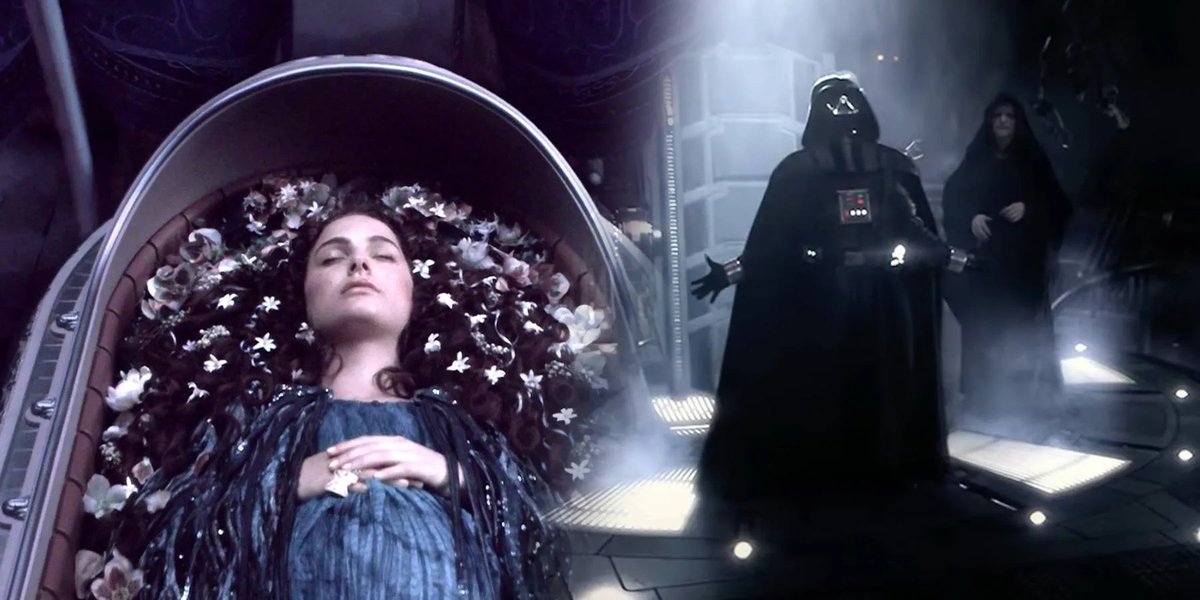
The final moments of Padmé Amidala in Star Wars: Episode III: Revenge of the Sith have haunted fans for nearly two decades, spawning some of the most enduring and passionate Understanding Padmes death and debates in the entire saga. Officially, the medical droids on Polis Massa delivered a perplexing diagnosis: Padmé, though "medically fine" after giving birth to Luke and Leia, had simply "lost the will to live." This explanation, seemingly straightforward on the surface, clashes dramatically with the resilient, determined character we knew, fueling countless "Fan Theories and Debates About Padmé's Death" that continue to shape how we view the tragic downfall of Anakin Skywalker and the birth of the galaxy's last hope.
At a Glance: Why Padmé's Death Remains a Mystery
- Official Cause: Medical droids stated she was "medically fine" but "lost the will to live" after Anakin's turn.
- Fan Critique: Widely seen as inconsistent with Padmé's strong, resilient character, who had survived war and assassination attempts.
- Leading Theories:
- The Force's Influence: The Force itself orchestrated her death to advance Anakin's destiny, viewing her as a cosmic sacrifice.
- Palpatine's Dark Side Manipulation: Darth Sidious may have drained her life force or used other Sith abilities to ensure her demise and fully corrupt Vader.
- Core Debate: Many fans perceive her death as a "rushed plot device" to remove her from the narrative and solidify Anakin's fall.
- Why It Matters: These debates highlight deeper questions about character agency, the nature of the Force, and storytelling choices in the Star Wars universe.
The Official Story: A Heartbreakingly Convenient Exit?
Imagine the scene: twin infants cradled in Obi-Wan's arms, the galaxy's last vestiges of light. Then, the pronouncement from a medical droid: Padmé, the former Queen, the Senator, the courageous warrior for democracy, is dead. Not from a fatal injury, not from childbirth complications, but from… despair. "She has lost the will to live." For many, these words landed with the weight of an anvil, not just for their tragic finality, but for their perceived narrative convenience.
The inconsistency is stark. This is a woman who, throughout the prequel trilogy, faced assassination attempts with defiance, negotiated tense political standoffs, and actively participated in a galactic war, all while pregnant and fighting for a peaceful future. She survived Geonosis, stood up to separatist leaders, and even bravely confronted a fallen Anakin on Mustafar. To suggest such a tenacious character would simply give up, especially with two newborns who desperately needed her, struck a dissonant chord with a vast segment of the fanbase. It felt less like a natural conclusion to her character arc and more like a forced exit.
Padmé's Character: More Than Just a Broken Heart
Let's remember who Padmé Amidala was. From her introduction, she embodied strength, intelligence, and unwavering principle. She was a visionary leader at 14, a shrewd diplomat, and a senator who risked everything for peace. Her love for Anakin was profound, but it was never her sole defining characteristic. She was independent, capable, and driven by a fierce sense of justice.
The argument against the "lost the will to live" explanation often circles back to her established resilience. Her character arc consistently showcased her ability to endure immense hardship and bounce back. She was pregnant, yes, and heartbroken by Anakin's betrayal, but she was also a mother who had just given birth. The primal instinct to protect and nurture her children would logically override any personal despair. Compare her fate to Anakin's, who, after being horribly dismembered and burned alive on Mustafar, endured immense physical trauma and survived, albeit as Darth Vader. The contrast raises a critical question: how could Padmé, "medically fine," succumb to heartbreak while Anakin, catastrophically injured, cling to life with such ferocity? This perceived disparity is a cornerstone of the fan debate.
Theory 1 – The Force as a Cosmic Puppet Master
One of the most compelling fan theories posits that Padmé's death wasn't just emotional or physical; it was a consequence of the Force itself, a cosmic design to advance Anakin Skywalker's destiny. In this view, the Force, an enigmatic entity with a will of its own, essentially "snuffed Padmé out."
The argument suggests that Padmé and Anakin were deeply intertwined by the Force, a bond far more potent than mere affection. Their connection, coupled with the birth of Luke and Leia (powerful Force-sensitives themselves), created a nexus of raw Force energy. For Anakin to fully transform into Darth Vader, unburdened by his past and ready to embrace the dark side's full power, perhaps Padmé had to be removed. Her presence, a potent reminder of the light, might have hindered his complete descent.
This theory implies a tragic, almost sacrificial role for Padmé. She wasn't just Anakin's wife; she was a critical piece in the galaxy's cosmic chess game, her life extinguished by the Force to achieve a greater (or darker) balance. It removes some of Padmé's agency, transforming her into a pawn in a larger, mystical narrative. Proponents often point to the Force's tendency to work in mysterious, often brutal ways, sacrificing individuals for the perceived "greater good" of its own ebb and flow. In this light, her death isn't a flaw in writing but a profound, albeit heartbreaking, act of cosmic will.
Theory 2 – Palpatine's Sinister Influence: A Dark Side Drain?
Another prominent theory throws the spotlight firmly on the ultimate manipulator: Darth Sidious, Emperor Palpatine. Many fans believe Palpatine may have used dark side abilities to subtly or overtly drain Padmé's life force, ensuring her demise and, crucially, severing Anakin's last ties to the light.
Think about Palpatine's character: a master of deception, a puppet master who orchestrated an entire galactic war. He explicitly told Vader, "In your anger, you killed her," a statement that, while possibly manipulative, could also carry a more literal, dark side implication. Palpatine was obsessed with life and death, even boasting to Anakin about Darth Plagueis's ability to "keep the ones he cared about from dying" and "create life." Is it so far-fetched to imagine him possessing the inverse ability: to subtly drain it?
The theory posits that Palpatine, sensing Padmé's proximity to Anakin and her potential to pull him back from the dark, would not leave her fate to chance. He needed Vader utterly broken, consumed by guilt and loyalty to his new master. A direct attack might have raised suspicion, but a subtle dark side drain, masquerading as a "lost will to live," would be perfectly in character for his insidious methods. The "medically fine" diagnosis from the droids could even be interpreted as a lack of understanding of dark side effects, leaving the true cause hidden. This theory adds a layer of Sith malevolence, turning Padmé's death from a tragedy of heartbreak into another cruel victory for the dark side, orchestrated by its most cunning master.
Beyond the Theories: A Plot Device in Disguise?
While the Force's influence and Palpatine's machinations offer compelling narrative possibilities, a significant portion of the fanbase expresses a more pragmatic, and often frustrated, interpretation: Padmé's death was simply a convenient, albeit poorly executed, plot device.
This perspective argues that the writers, specifically George Lucas, needed Padmé out of the picture for several key reasons:
- Completing Anakin's Fall: For Anakin to fully become Vader, his last, strongest attachment to the light—Padmé—had to be removed. Her death, which he tragically believes he caused, fuels his guilt and solidifies his commitment to the dark side.
- Explaining Luke and Leia's Secrecy: Her death necessitated the separation and hiding of the twins, setting up the entire premise of the Original Trilogy. Without her death, their hidden upbringing becomes far more difficult to justify.
- Removing Her from the Original Trilogy: Padmé simply couldn't exist in the same timeline as A New Hope without fundamentally altering the narrative and the solitary lives of Luke and Leia. Her absence was a necessary precursor.
Critics of this "plot device" approach often point to the "rushed" feeling of her final scenes. Her sudden decline, despite her previous strength, feels unearned and underdeveloped. It sacrifices a rich, complex female character for the sake of advancing the male hero's journey and streamlining future narrative requirements. This perception isn't just about dissatisfaction with the how of her death, but the why—a sense that her character was diminished to serve the plot, rather than being allowed a more consistent and impactful conclusion.
Why These Debates Endure: The Power of Fan Engagement
The enduring "Fan Theories and Debates About Padmé's Death" speak volumes about the power of fan engagement and the deep connection audiences form with beloved franchises. When a narrative point feels inconsistent or unsatisfying, fans naturally step in to fill the gaps, to reconcile the story with their understanding of the characters and the established universe.
These theories aren't just about "fixing" a perceived flaw; they are a testament to the passionate desire for coherent, meaningful storytelling. They explore the deeper implications of the Force, the moral complexities of the characters, and the narrative choices made by creators. These debates allow fans to collectively grapple with tragic elements, to re-examine themes of destiny, free will, good, and evil within the Star Wars saga. They keep the story alive, reinterpreted, and endlessly fascinating.
What Does It Mean for Star Wars Canon?
It's important to acknowledge that, officially, the canonical explanation for Padmé's death remains "loss of the will to live." Disney and Lucasfilm have not altered this in subsequent materials, although they have expanded on her impact and legacy. However, fan theories, by their very nature, exist in a space beyond strict canon. They represent an ongoing conversation, a collective re-imagining that doesn't necessarily seek to change the official record but rather to deepen understanding and address perceived inconsistencies.
The existence of such fervent theories highlights a crucial tension between creator intent and audience interpretation. While George Lucas likely intended Padmé's death to be a tragic culmination of Anakin's fall, the execution left many yearning for a more robust explanation that honored her character. The beauty of a sprawling saga like Star Wars is that it inspires this kind of passionate, critical re-examination, allowing multiple interpretations to coexist and enrich the overall narrative landscape.
The Enduring Mystery of Padmé Amidala
Ultimately, the exact "cause" of Padmé Amidala's death remains one of Star Wars' most debated and emotionally charged plot points. Whether you lean towards the Force's cosmic machinations, Palpatine's dark side influence, or simply view it as a narrative shortcut, the discussions surrounding her demise continue to reveal much about the characters, the Force, and the very act of storytelling.
Padmé's strength, her love, and her tragic end leave an indelible mark on the Star Wars saga. The debates about her final moments are not just academic; they are a reflection of how deeply fans connect with these characters and how much they desire their journeys, even in tragedy, to be both consistent and profoundly meaningful. As the saga continues to evolve, the mystery of Padmé's death will undoubtedly remain a fertile ground for discussion, ensuring her legacy, and the impact of her profound sacrifice, are never truly forgotten.